Literature: The antidote to the Pakistani identity crisis
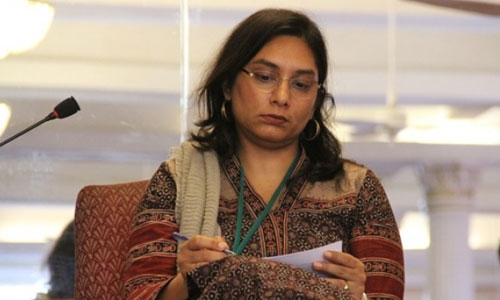
March 15, 2014: Bina Shah is a Pakistani author with who has written the “Slum Child” and “The 786 Cyber Café”. In her talk titled "Literature: The antidote to the Pakistani identity crisis", she shared her ideas on the effect of Pakistani writers writing in English on the contemporary and postcolonial environment. She talked about the formulation of the ‘Pakistani identity’ and the ‘identity crisis’ that stems for a modern Pakistani living in a nation of “a myriad of ethnicities, histories, languages, religions, experiences”, saying that she truly believes that literature can be a “powerful tool to heal Pakistan’s identity crisis.”
She also spoke about the plight of the minority population of the nation, plurality eludes some of us, saying that Pakistani writers, by writing about them have given them “space in their narratives, and hence the psychological and mental space which can translate to physical space that they need to be productive and safe in society.” However, as various feminist such as bell hooks and Spivak have pointed out that it would certainly be better instead of speaking for these minorities we allowed them to speak on their own.
She went on to talk about the various linguistic tools that modern Pakistani writers use, such as transliterating dialogue, rather than translating local expressions. According to Shah, this is a powerful tool, which she termed “reverse colonization”, to own local identities and tell the countless stories present in this postcolonial time. She mentioned a number of writers who use this technique to portray the local cultural nuances.
Her final words of advice encouraged young people to write, as “stories have the power to make voices heard, overcome passivity, broaden our horizons and gradually help overcome the Pakistani identity crises, if allowed to flourish.”